

Frequently asked questions about system integration
What is system integration?
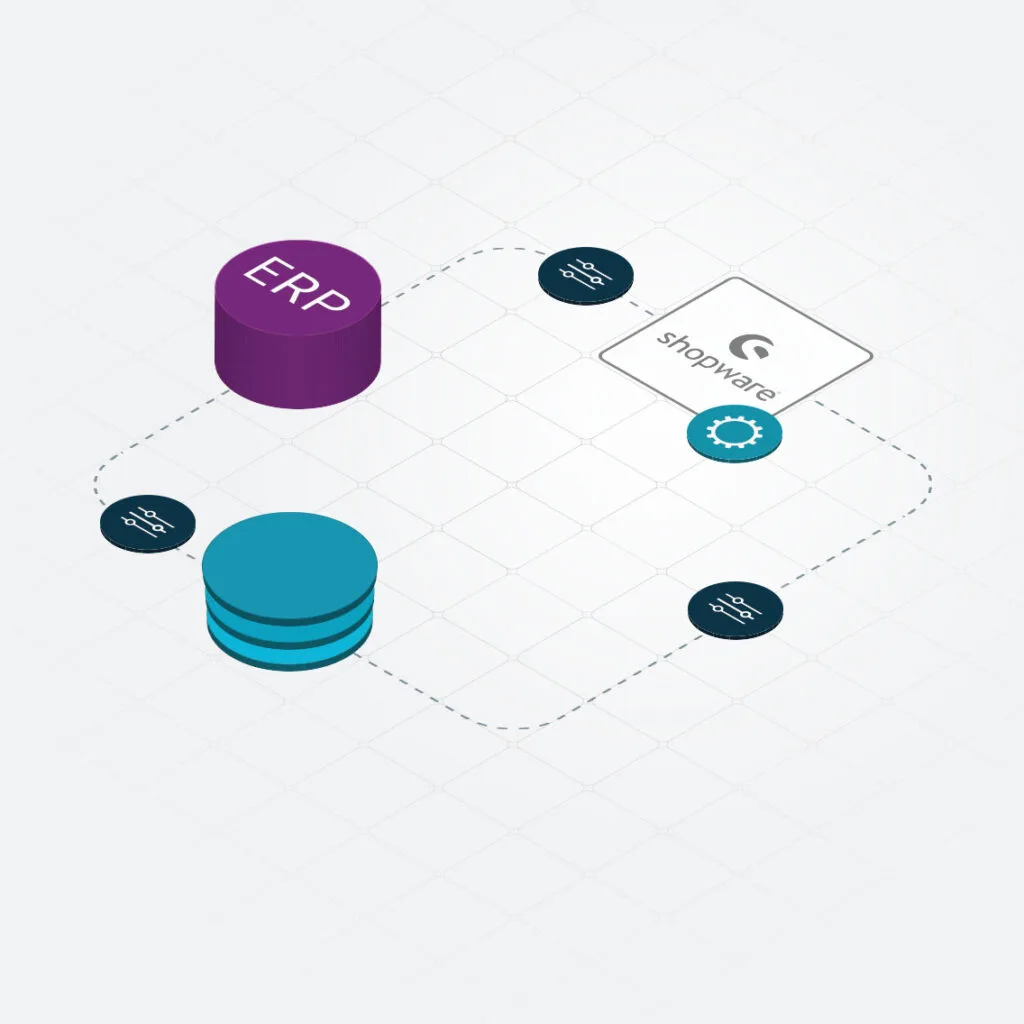
System integration connects applications that work separately into one process. An order from the shop reaches the ERP without a manual step, the customer record reaches the CRM and the shipping status goes back to the shop. Instead of maintaining data in several places, there is one path it travels and one place that shows whether it arrived.
Which systems can ebiscon connect?
Over 100 systems from ERP, CRM, PIM, e-commerce, payment and shipping are ready to go, among them SAP, Salesforce, Oracle, Pimcore, Shopware, Stripe, Adyen, GLS, DPD and FedEx, as well as databases such as MySQL and PostgreSQL. For systems without a ready connector we build the interface, over the API of the system, over file transfers or over EDI.
Is integration possible without the ebiscon integration platform?
Yes. We build both. Over the platform when many systems are involved, when processes are going to change or when one place is needed that shows every data flow. As a purpose-built interface when the connection is clearly bounded or when everything has to stay inside your own environment. Which way is cheaper gets decided at the start, not by the product.
What is the difference between iPaaS and middleware?
The two words do not describe the same kind of thing. Middleware is the type of solution, the layer that translates, routes and buffers between systems. iPaaS describes how it is delivered and operated, as a platform service with connectors, process logic and monitoring already in place. Middleware can run in your own data centre, as SaaS or as iPaaS. So the question that decides a project is a different one: who operates it, and who can still change the processes after the first project. We take on both, classic middleware projects inside your environment as well as running everything on our platform.
How does an integration project at ebiscon run?
In five steps: gathering requirements, connecting the systems involved, configuring the processes, validating with real data and scaling to daily operation. Every step ends with something you can check, so before go-live it is clear which records travel where and what happens when one of them does not arrive.
3 more questionsShow fewer
What does a system integration cost?
The price depends on the number of systems, on whether a connector exists for them or an interface has to be built, on the volume and complexity of the data objects and on how much legacy data has to be migrated once. After a conversation about systems and data volumes you get a quote with a fixed scope.
What happens when a connected system fails?
The data flows are monitored. If a target system fails, the records wait in the platform instead of getting lost, and they are delivered as soon as the system is reachable again. What you see is not only that something failed but which record it was.
Who runs the interfaces after the project?
ebiscon, if you want that, including monitoring and adjustments when a connected system changes. Handing them over to your own IT works just as well: the processes are configured and documented, not hidden inside single scripts, and can be developed further without us.